Leek
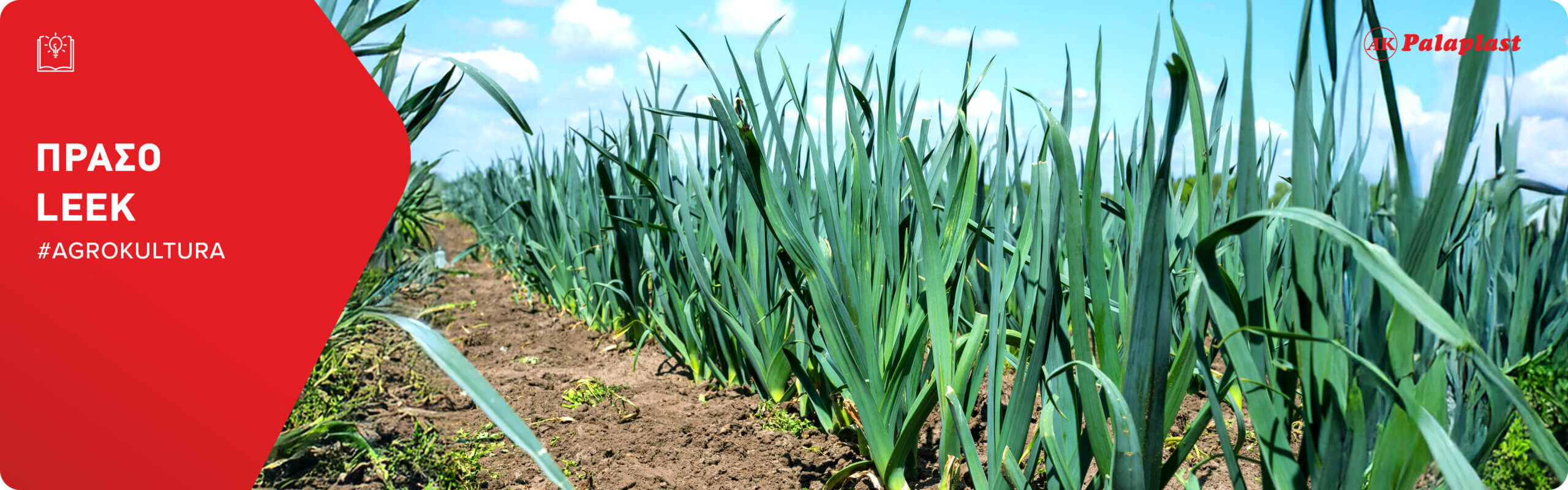
Leek is a plant of the Liliaceae family and the Allium genus. It is cultivated as an annual crop for plant production, and as a biennial crop for seed production. Originating from the Middle East and the eastern Mediterranean region, the leek is a fast-growing plant whose leaves and pseudostem can reach up to 90 cm in height.
In most regions, sowing takes place in spring or autumn, depending on the local climate and variety. Propagation is done exclusively by seed — typically through an initial sowing in a seedbed, followed by transplanting of young seedlings into the field.
Leek Cultivation
Sowing
Leek cultivation requires well-prepared soil and deep plowing, which improves aeration, drainage, and soil structure. This facilitates plant growth, incorporation of organic residues, and weed control.
Although leeks can grow in a wide range of soils, they thrive best in fertile, well-drained soils rich in organic matter. Soils that retain excess moisture should be avoided, as they promote fungal diseases. The ideal soil pH ranges between 6.0 and 7.5. The plant also shows good tolerance to salinity and frost.
Plant spacing usually ranges from 10–15 cm between plants and 30–40 cm between rows, depending on the variety and desired planting density.
Seeds take approximately 10–12 days to germinate in the seedbed, with an optimal soil temperature of around 20 °C. The leek has a shallow root system concentrated within the upper 5–10 cm of the soil, which makes it highly dependent on regular irrigation to maintain adequate soil moisture. Immediately after transplanting, consistent watering is crucial for successful plant establishment.
Plant Development
The ideal ambient temperature for leek growth is between 13–24 °C, although the plant can tolerate lower temperatures. It prefers soils of light to medium texture. Unlike many other crops, leek productivity is not significantly influenced by solar radiation intensity.
Leek Crop Management
Fertilization
Leeks are nutrient-demanding plants with high requirements, particularly for nitrogen (N), which promotes leaf growth. Phosphorus (P), potassium (K), magnesium (Mg), manganese (Mn), and zinc (Zn) are also essential for optimal development.
A rational fertilization plan includes a base fertilizer application before or during planting, followed by supplementary feedings throughout the growing period. When drip irrigation is used, top dressing can be applied through fertigation. Soil analyses are recommended to accurately determine nutrient needs for each field.
Plant Protection
Leeks, like most crops, are susceptible to weeds, pests, and fungal diseases. The most significant threat comes from weeds, as leeks are poor competitors and require weed control measures. Herbicide applications alone are often insufficient, making manual weeding necessary afterward to remove remaining weeds.
Timely and appropriate use of plant protection products, under the guidance of an agronomist, is essential for healthy growth and high yields.
Common pests include Tuta absoluta (a moth species) and various aphid species, while fungal diseases such as downy mildew and fusarium wilt are frequent problems.
Irrigation
As a winter vegetable, leek requires increased water supply during its early growth stages. Insufficient irrigation can reduce both leaf and seed quality.
Sprinkler irrigation is considered the most suitable method for this crop, especially due to its planting density. Sprinklers with a medium radius (7–16 m) are typically used. For smaller cultivation areas, drip irrigation can also be applied, particularly where plant spacing is wider.
By using modern irrigation methods instead of flood irrigation, growers can maximize yield, save water, and reduce overall costs.
High-performance irrigation systems, durable under challenging weather conditions and ensuring long-term efficiency, are the hallmark of our company.