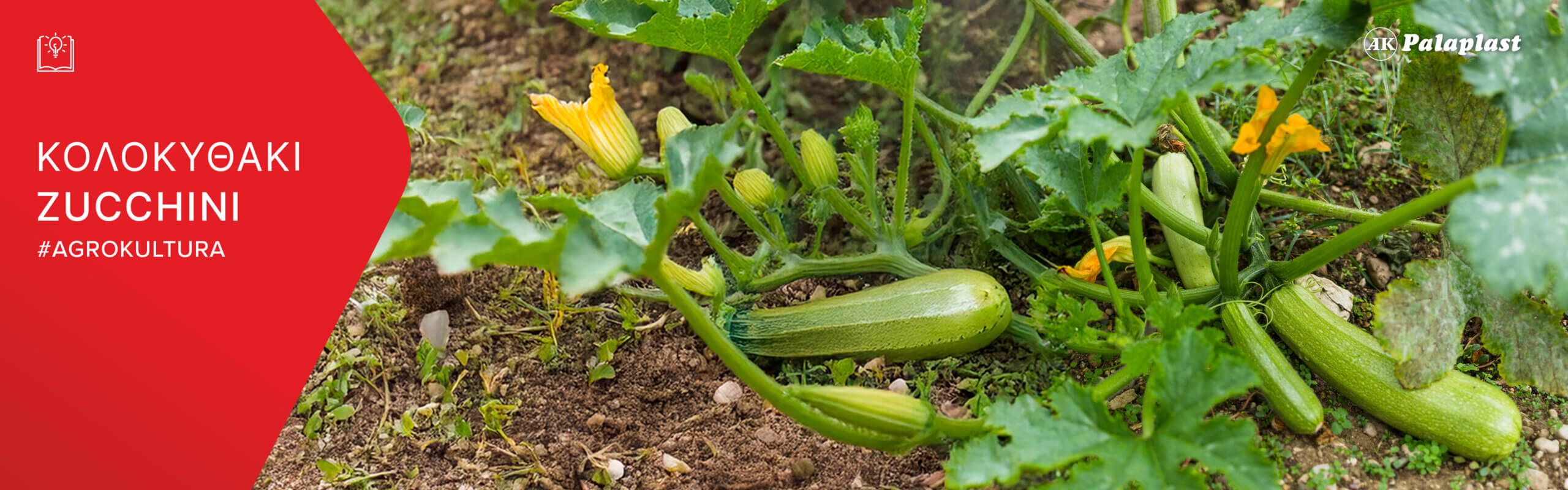
Zucchini (Cucurbita pepo L.) belongs to the Cucurbitaceae family and originates from the American continent. It is botanically related to melon, cucumber, and watermelon. It is a distinctive climbing or creeping plant cultivated as an annual crop for its fruit. In Greece, zucchini is grown year-round. During winter, it is cultivated in greenhouses using either conventional methods or hydroponics. Outdoor cultivation begins around early March and may continue until early October, depending on the climatic conditions of each region. Outdoor crops are established either by transplanting pre-grown seedlings or by direct sowing. In early plantings, row covers are often used, while in favorable seasons, planting may be done without any cover. Many varieties exist, and the appropriate one is chosen based on the desired fruit size.
Zucchini cultivation requires thorough soil preparation. It thrives in fertile soils rich in organic matter, with medium texture and good drainage. The ideal soil pH for zucchini ranges from slightly acidic to neutral, typically between 6.0 and 7.5. Zucchini is considered relatively tolerant to soil and water salinity, but it is sensitive to strong winds.
Zucchini plants are spaced relatively far apart, usually 1.0 to 1.2 meters between rows and 50 to 80 centimeters between plants. Plant population ranges from 1,000 to 2,000 plants per acre. Zucchini seeds germinate and emerge within eight to ten days. Compared to other cucurbits such as melon, watermelon, or cucumber, zucchini is more tolerant of low temperatures and less tolerant of high temperatures. Sunlight is essential for photosynthesis and thus critical for plant growth. The ideal soil temperature for germination is between 15°C and 17°C. Soil temperatures below 10°C can harm the plant. Zucchini has a shallow and sensitive root system, so it has high water requirements. Irrigation immediately after planting is necessary.
Zucchini is a warm-season crop that is not frost-tolerant. The optimal ambient temperature ranges from 18°C to 30°C. Excessive humidity can lead to crop issues. Sandy loam soils enriched with organic matter are best suited for zucchini. Light is crucial for maximizing yields, as photosynthesis depends on sufficient sunlight.
Due to its high productivity, zucchini absorbs large quantities of nutrients from the soil. Adequate plant nutrition ensures proper growth and higher yields. Throughout the crop cycle, the plant requires nitrogen, potassium, magnesium, manganese, phosphorus, calcium, iron, zinc, sulfur, boron, and copper. Zucchini is a demanding crop in terms of nutrients, and for this reason, both soil analysis and foliar diagnostics are essential. Special attention should be given to nitrogen levels, as over-application can lead to increased disease susceptibility. The exact amount of each nutrient must be determined through soil testing to tailor fertilization to the specific needs of each field and crop.
Zucchini, like most crops, is susceptible to various pests and diseases. Timely plant protection is essential and should always be done with the guidance of experienced agronomists and the use of suitable plant protection products. Common insect pests affecting zucchini include beetles, whiteflies, spider mites, aphids, and the melon lady beetle. The crop may also be affected by fungal and bacterial diseases such as downy mildew, damping-off, powdery mildew, botrytis, sclerotinia, and vascular wilts.
Zucchini has high water requirements and needs frequent, light irrigation, especially during hot months. Soil moisture must be maintained to a depth of 30–35 cm, where most roots are concentrated. Water quality is a key factor. Excessive moisture in the soil can promote fungal infections. On the other hand, drought stress leads to reduced fruit quality and negatively affects growth and fruit color. The most effective irrigation method for zucchini is drip irrigation.
Drip irrigation is ideal because it allows for precise control over water dosage and irrigation cycles, depending on soil type and other conditions. This method significantly reduces evaporation and almost eliminates runoff. Water savings can exceed 50–60% compared to other irrigation methods. Additionally, drip irrigation enables fertigation, allowing for accurate and efficient nutrient delivery. Nutrients are absorbed quickly and directly by the plants.
This system can be used in both open-field and greenhouse cultivation. It utilizes PE drip lines (Φ16 or Φ20) with emitter spacing of up to 0.4 meters and flow rates of 2 or 4 liters per hour. Alternatively, plain or pressure-compensating emitters can be installed on PE pipes. In hydroponic systems, irrigation is performed using acid-resistant drippers, as nutrient-enriched water is often combined with small quantities of acid to regulate pH.
By employing modern irrigation techniques, growers can maximize plant productivity, conserve water, and reduce overall production costs. Efficient water distribution, precision in flow and timing, cost reduction, reliability, and the use of durable, high-quality irrigation products capable of withstanding harsh weather conditions are all synonymous with our company and contribute to long-term performance in zucchini cultivation.
- Irrigation Pipes DRIP-PAL, SUPER-PAL, (Black & White), AGROPAL HDPE 80 and HYDROPAL PE 100
- Driplines : (PALADRIP, PALADRIP-SLIM, PALADRIP-XL, PALADRIP-FC)
- PALADRIP-TAPE-SD
- Dripline fittings, Drip Tapes and Indented
- Fittings, Hydroponics set & Self Compensating drippers, Agras, Axios, Agraponic, Nestos.
- Saddles , Valves , Plastic Filters, Lock type fittings & Compression fittings