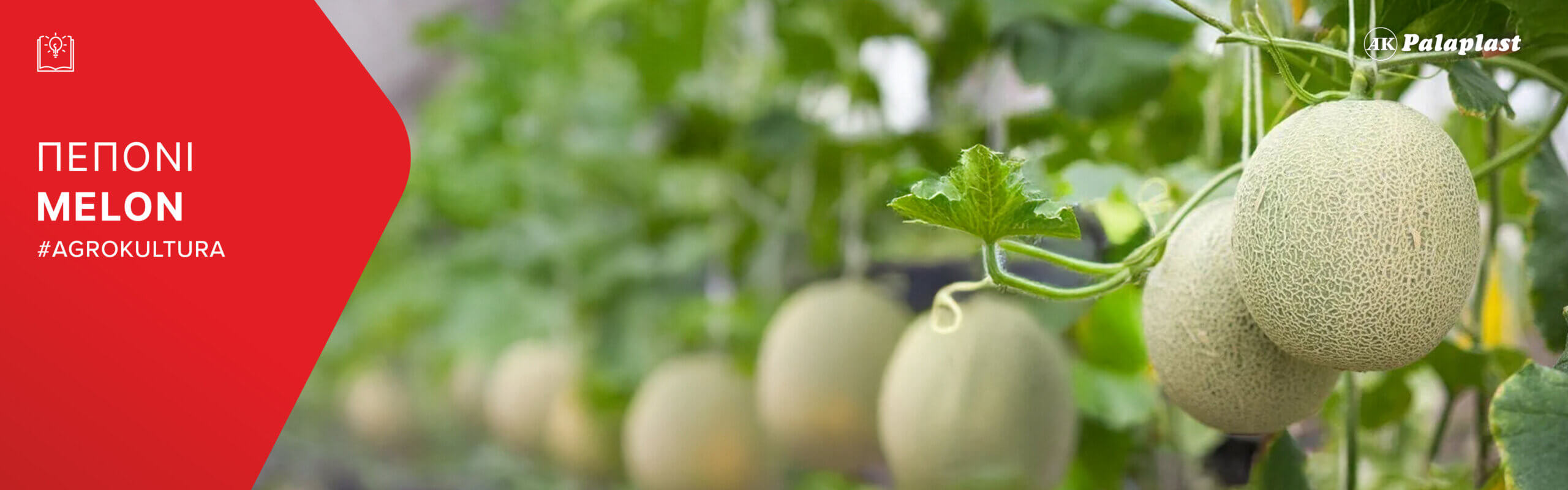
Melon (Cucumis melo) belongs to the Cucurbitaceae family. It originates from both the African and Asian continents and is closely related to zucchini, cucumber, and watermelon. It is a unique annual plant with a climbing or creeping growth habit, cultivated for its fruit. In Greece, melons are mostly grown outdoors, covered with polyethylene (PE) film in low tunnels. To a much lesser extent, particularly in southern Greece, they are also cultivated as a second crop in taller greenhouses due to their short biological cycle. The conventional method of cultivation is applied, with planting typically beginning in early March and lasting until May, depending on local climatic conditions. Outdoor cultivation is primarily done by transplanting seedlings and, to a lesser degree, by direct sowing. There are several varieties available, and the appropriate one is selected based on the desired fruit size.
Melon cultivation requires thorough soil preparation and performs best in medium-textured, fertile, deep, and well-drained soils. The optimal soil pH ranges from slightly acidic to slightly alkaline, ideally between 6.0 and 7.5. Melon plants exhibit moderate tolerance to salinity in both soil and irrigation water. Proper spacing is crucial for healthy plant development and productivity. Plants are spaced widely apart, typically 1.2 to 2.0 meters between rows and about 50 centimeters between plants. Planting density can range from 1,000 to 1,700 plants per acre for outdoor cultivation. In greenhouses, spacing is approximately 30% closer. Melon seeds germinate and emerge within three to ten days. The plant requires high temperatures for both germination and growth, with the optimal soil temperature exceeding 20°C. Although melon plants can develop a deep and extensive root system, most roots remain near the surface. Immediate watering after planting is essential.
Melons thrive in warm, sunny climates and require high temperatures, as they are not frost-tolerant. The ideal ambient temperature ranges from 25°C to 32°C. These plants do not tolerate overly moist soils and grow best in clay loam soils. To ensure good soil fertility, it is important to incorporate organic matter. Light is a vital factor in maximizing yields, as it is essential for photosynthesis.
Due to the high fruit production, melon plants have increased nutrient demands and absorb large quantities of mineral elements from the soil. Proper plant nutrition supports better development and improved yields. Throughout its growth cycle, the plant requires adequate levels of nitrogen, potassium, magnesium, and phosphorus. Because melons are demanding in terms of nutrients, soil analysis and leaf diagnostics are essential. The exact nutrient requirements must be determined through a detailed soil test, allowing farmers to identify specific macro- and micronutrient needs for each field.
Melon plants, like most crops, are vulnerable to weeds, pests, and diseases. Timely and proper plant protection is critical and must be carried out under the guidance of experienced agronomists using appropriate crop protection products. Common insect threats include silverleaf moth, flies, whiteflies, spider mites, aphids, thrips, and melon lady beetles. Infestations by nematodes are also observed. In addition to insect pests, melon plants are susceptible to several diseases such as Cladosporium, Alternaria, powdery mildew, downy mildew, Pythium, bacterial wilt of cucurbits, and anthracnose.
Melon plants have high water requirements and need frequent and light irrigation, especially during the warmer months. Soil moisture must be maintained at a depth of 30–60 cm, where most of the root system is located. Water quality is a key factor. Excessive soil moisture and leaf wetness promote fungal diseases. On the other hand, water stress can reduce fruit quality and negatively impact plant development and fruit color. The most effective irrigation method is drip irrigation.
Drip irrigation is highly recommended because it allows for precise water delivery at the right time without waste, reducing weed growth. It also enables fertigation, providing plants with essential nutrients quickly and efficiently, with minimal nutrient loss and fast absorption. This method is used in both open-field and greenhouse cultivation using drip lines or tapes, with emitter spacing up to 0.6 meters and flow rates of 2 to 4 liters per hour. The required length of drip lines per acre ranges from 500 to 840 meters. With a spacing of approximately 0.5 meters, an irrigation flow rate of around 3.5 m³/h per acre is needed for 840 meters of tubing at 2 l/h per emitter, and up to 7 m³/h for the same setup with 4 l/h emitters.
By using modern irrigation methods, farmers can maximize plant productivity while conserving water and reducing overall production costs. Efficient water use, precise flow control, reduced costs, system reliability and durability, and high-quality irrigation products capable of withstanding extreme weather conditions are key features offered by our company, supporting long-term performance and sustainability in melon cultivation.