CUCUMBER
Cucumber (Cucumis sativus L.) belongs to the Cucurbitaceae family and originates from the Asian continent. It is a climbing annual plant, mainly cultivated for its fruit. Cucumber is typically propagated by seeds sown in nurseries, while direct sowing in the field is rarely practiced.
Cucumber Cultivation
- Sowing
Cucumber is grown outdoors during the summer months but is mostly cultivated in greenhouses throughout the year. In open-field conditions, planting begins in early April and can continue until early June, depending on the weather conditions in each region. In greenhouses, two main cultivation methods are used: conventional and hydroponic. There are various cucumber varieties, and the choice depends on the desired fruit size.
Although cucumber can adapt to different soil types, proper soil preparation is essential. The best yields are achieved in medium-textured soils with good drainage. The ideal pH range is 5.5 to 7. The plant is sensitive to salt presence in both the soil and irrigation water and does not tolerate strong winds.
Transplanting is done in holes along rows, spaced approximately 0.8 meters apart between rows and 0.5 meters between plants within the row. Support and pruning are essential cultivation practices. In open-field cultivation, plant density ranges from 1,600 to 1,700 plants per hectare. Seeds germinate and emerge within 3 to 5 days, and sunlight is vital for photosynthesis. The ideal soil temperature for germination is above 15°C. Cucumber has a shallow root system, requiring frequent irrigation; thus, watering immediately after transplanting is essential.
- Plant Development
Cucumber requires high temperatures and is not frost-tolerant. The ideal growing temperature ranges between 18°C and 25°C, along with high atmospheric humidity. The most suitable soils are loamy or sandy-loamy with sufficient organic matter. Light plays a critical role in yield, being necessary for effective photosynthesis.
Cucumber Crop Requirements
- Fertilization
Due to its high productivity, cucumber absorbs large quantities of inorganic nutrients from the soil. Proper plant nutrition contributes to better growth and increased yield. During cultivation, the plant requires nitrogen, potassium, magnesium, phosphorus, calcium, iron, zinc, and copper. Due to these high nutrient demands, soil analysis and foliar diagnostics are essential to apply fertilization accurately based on the specific needs of each plot.
- Plant Protection
Cucumber is susceptible to weeds, fungi, and diseases, and protection must be timely and properly managed by agronomists. Major insect pests include leafminers, whiteflies, spider mites, aphids, and thrips, while nematode infestations may also occur. Common diseases include cucumber mosaic virus, stem wilt, sclerotinia, verticillium wilt, fusarium wilt, anthracnose, cladosporium leaf spot, alternaria, downy mildew, powdery mildew, and botrytis.
- Irrigation
Cucumber has high water needs, especially during hot months. Frequent and light irrigations are required to keep the soil moist to a depth of 25–35 cm, where most of the root system is located. Water quality is crucial, as poor irrigation affects fruit quality, hinders growth, and alters fruit color.
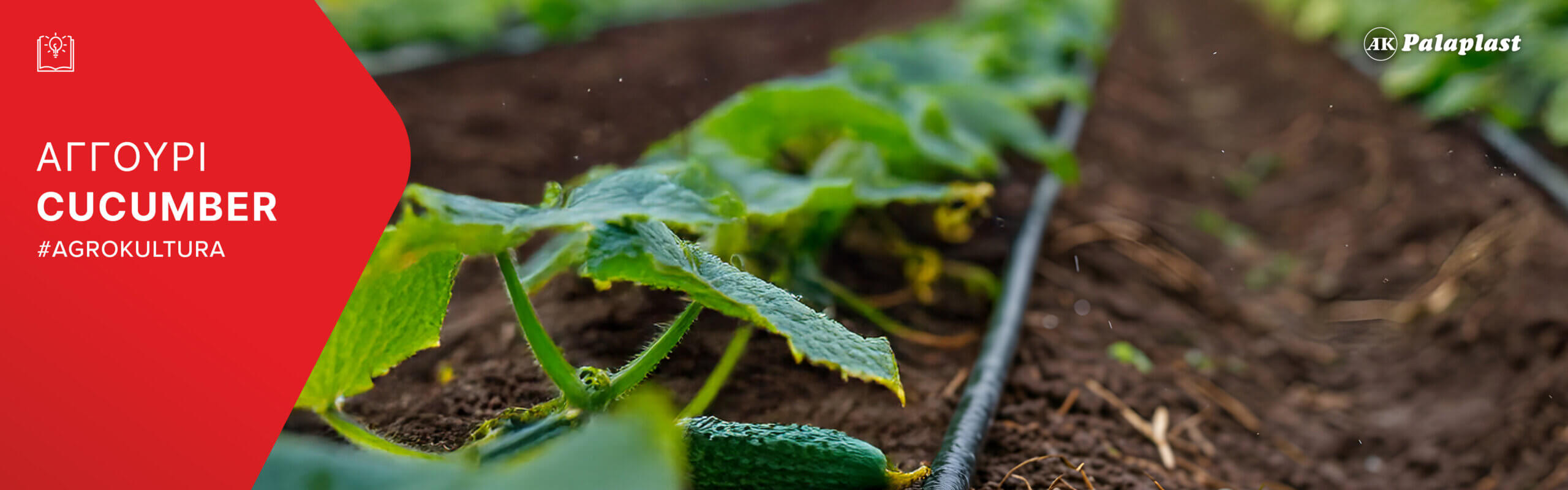
The most efficient irrigation method is drip irrigation, offering precise water amounts along with fertigation. Using drip lines or tapes minimizes water waste by reducing evaporation and runoff. Drip irrigation is used in both open-field and conventional greenhouse crops with pipes of Ø16 and Ø20, spacing up to 0.4 m, and flow rates of 2 or 4 liters per hour. In hydroponic systems, irrigation is provided through acid-resistant drippers, as acids are often added to the nutrient solution to regulate pH.
The use of modern irrigation techniques ensures maximum plant yield, water savings, and reduced overall production costs. Efficient water management, precise flow rate delivery, and the durability of materials even in harsh conditions highlight the advantages of the irrigation solutions offered by our company.
- Irrigation Pipes: DRIP-PAL, SUPER-PAL (Black & White), AGROPAL HDPE 80, and HYDROPAL PE 100
- Drip Lines: PALADRIP, PALADRIP-SLIM, PALADRIP-XL, PALADRIP-FC
- Drip Tape: PALADRIP-TAPE-SD
- Drip Line and Drip Tape Fittings, as well as Plug-in Fittings
- Hydroponic Kits & Agraponic Drippers
Saddles, Valves, Filters, Lock Fittings & Threaded Fittings